top of page

Knowledge Hub

This page provide open access blogs, newsletter articles and translated research papers about soil health, climate resilience and diversified pasture systems in Australia
Principles of Soil Health

Sustaining profitable agriculture production: a conceptual and practical guideline for practitioners and researchers

Screenshot 2026-06-30 133558.png

Why is biology key to soil health

Healthy soil is a complex dance between soil biological, chemical and physical soil characteristics. This ebook provides a deeper understanding of the factors contributing to healthy soil

SSC Workshop LKA_edited.png

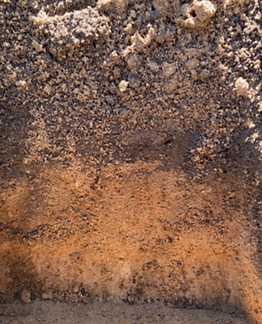
Soil structure: the foundation of healthy soils

Soil is a dynamic three dimensional living system that serves as both a habitat of soil organisms and a medium for recycling nutrients and water. This ebook provides a deeper understanding of soil structure in healthy soils.

soil str.png

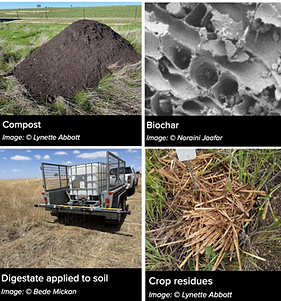
Biological amendments for soil health

Lyn Abbott and Bede Mickan from The University of Western Australia, provide insights into research on enhancing soil health using biological amendments

sba.png

Soil health: Assessing and monitoring using soil biology

There is considerable interest in monitoring and quantifying soil biology as an indicator of soil heath, however, this is a complex task. Dive into Lyn Abbott's point of view.

Picture-1-scaled.jpg

Soil biodiversity is essential for building environmental resilience

Soil is a biodiversity ‘hotspot.’ Indeed, soil organisms are represented in all six Kingdoms (Monera, Archaea, Protista, Fungi, Animalia, and Plantae) and fulfill key roles in important processes relevant to soil health, including those that regulate global nutrient and climate cycles.

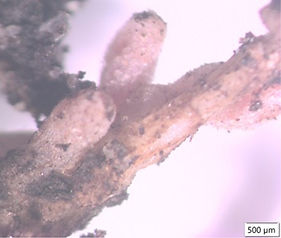
Soil health: A role for arbuscular mycorrhizas

The fungi have co-evolved with plants over millions of years but cannot be easily cultured as an inoculant in artificial conditions for use in agriculture. Understand these specialised plant-microbe associations with Lyn Abbott.

Picture-2.png

Soil health: Impacts of fertilisers on soil organisms

Most soils are deficient in nutrients needed to support the growth of agricultural plants; therefore, nutrient supplements are essential to sustain food security. understand the intricate link between soil organisms and applied fertilisers.

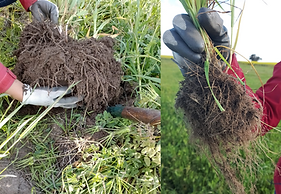
Soil health: The importance of the rhizosphere

The rhizosphere is the area of soil that is in very close contact with roots. Roots profoundly influence microbial processes in this zone, and many of these processes are critical to soil health.

Picture-5-1536x1301.jpg

The importance of earthworms for soil health

Earthworms are common soil organisms and have attracted the attention of many of us because they occur in gardens, parks, agricultural regions, and natural ecosystems.

Building healthy sandy soils in agricultural landscapes

Sandy agricultural soils generally have lower productivity than soils with higher concentrations of finer clay and silt particles, but they are widespread and important worldwide for food and fibre production.

image-2-696x861.png

Contact Us

Phone

​

General enquiries,

9am - 4pm​

​

(+61 ) 404 007 110

Email

​

Send an enquiry​

​

hira.shaukat@uwa.edu.au

Location

​

G022, Agriculture North Wing

​

Campus map >>

  • LinkedIn

linkedIn

​

#climatesmartagricultureprogram​


Follow our team members

​

© 2026 by UWA School of Agriculture  |  Designed by Tammie Harold

bottom of page