Trialling and demonstrating benefits of new pasture composition for improved soil health
The University of Western Australia &
WA Department of Primary Industries and Regional Development
Overview
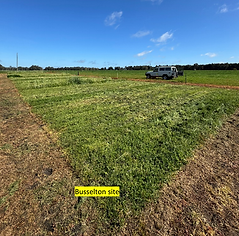
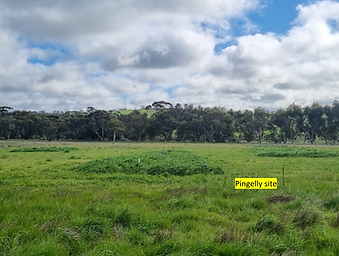
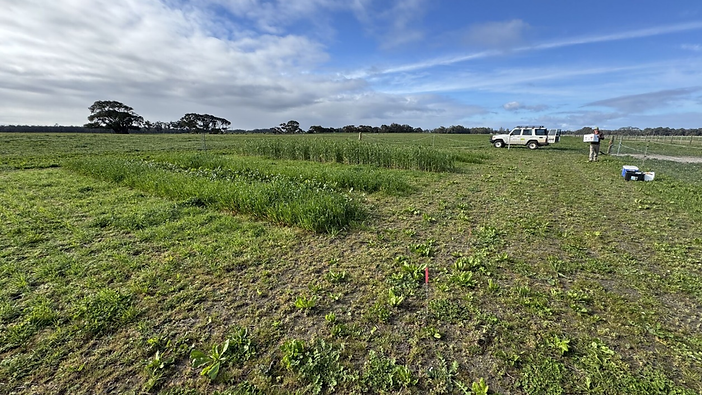
This project is evaluating how mixed-species pastures can improve soil health, pasture productivity, and farming resilience across Western Australia's diverse agricultural environments. Field demonstrations and research trials have been established across five locations representing contrasting soil types and rainfall zones, including Moora, Harvey, Busselton, Warner Glen (Margaret River), and Pingelly. The trials compare annual and mixed annual–perennial pasture systems, with the Pingelly site also investigating the medium-term effects of compost and biochar–digestate amendments on soil function and pasture performance.
Using simulated grazing management, the project assesses pasture establishment, biomass production, species persistence, soil biological activity, and soil health across different farming systems. The demonstration sites also provide opportunities for farmer engagement and knowledge exchange, supporting the adoption of more diverse and resilient pasture systems in Western Australia contributing to outcome 1 & 2 of this project.
Key Activities
-
Established and monitored five pasture research sites across Western Australia to evaluate pasture performance, soil health, and biomass production under diverse environmental conditions.
-
Conducted regular field monitoring of sites, including monthly soil and plant sampling throughout the growing season, where favourable conditions supported strong pasture growth and high biomass production.
-
Managed site-specific challenges by implementing weed control strategies and adapting trial management in response to environmental constraints, including waterlogging, herbicide damage, and high weed pressure.
-
Collected comprehensive soil and biomass datasets across all active trial sites, with laboratory analyses and statistical evaluation currently underway to assess treatment effects on pasture productivity and soil biological processes.
-
Collaborated with the Lower Blackwood LCDC community group to coordinate field walk events, facilitating knowledge exchange between researchers, farmers, and industry stakeholders.
-
Presented project updates at the Lower Blackwood LCDC meeting (2–3 December 2025), discussing trial outcomes, site progress, and future research directions.
-
Reviewed trial performance to guide future research, including evaluating site continuation and refining experimental approaches for the 2026 growing season.
Activity contact
Dr James O' Connor
Trials Gallery